LBW Rule in Cricket Explained:Pitching, Impact, Wickets, and Umpire’s Call
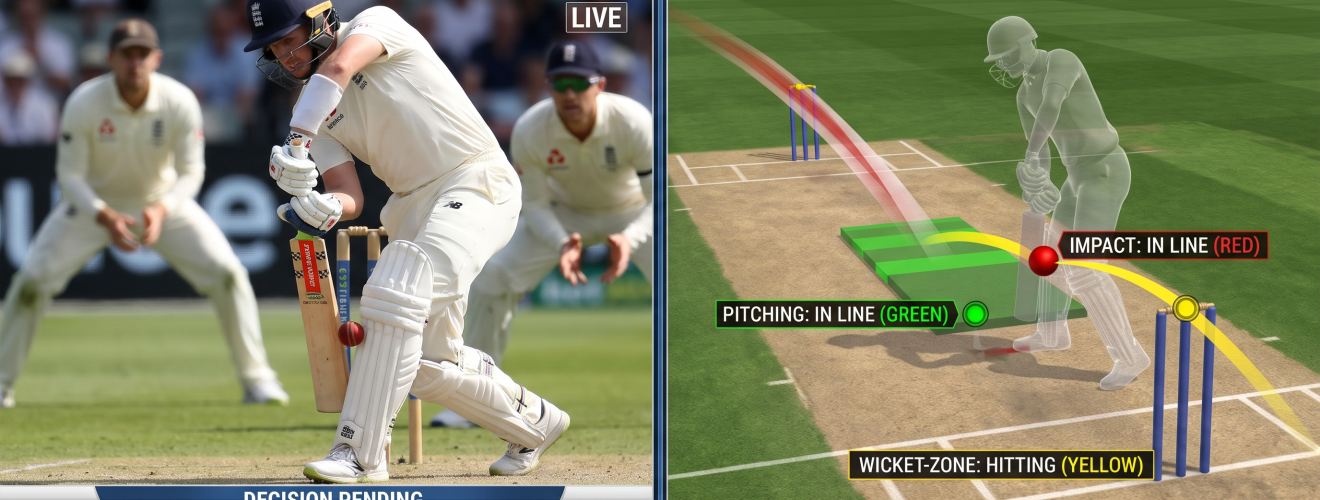
lbw rule in cricket
Understanding the lbw rule in cricket turns one of the sport’s most dramatic moments—the unified roar of “Howzat!”— into a clear, logical sequence. Codified under MCC Law 36: Leg Before Wicket by the Marylebone Cricket Club at Lord’s and enforced across international cricket via the International Cricket Council (ICC) Playing Conditions, Leg Before Wicket exists for a simple reason: batters must defend their stumps with their bat, not with their legs or body. Because
cricket balls swing in the air and seam or spin laterally off the pitch, the law balances fairness between bat and ball through a strict sequence of five geometric conditions
The Five-Step Umpire Checklist Under MCC Law 36
Whenever the fielding team appeals for LBW, the on-field umpire—and the television third umpire during a review— evaluates five sequential criteria defined in the MCC Laws of Cricket 2017 Code. If even one of these five checks fails the batter is Not Out:
- Fair Delivery (Not a No-Ball): Under Law 36.1.1, a batter cannot be dismissed LBW off a No-Ball under any circumstances. Before checking ball-tracking in televised games, the third umpire verifies that the bowler’s front foot landed legally behind the popping crease.
- No Bat or Glove Contact First: Under Law 36.1.3, the ball must intercept part of the striker’s person before touching their bat. Under Law 5.6, a batter’s hand or glove actively holding the bat handle counts as part of the bat itself. Even a 1-millimeter inside edge of wood or glove saves the batter from LBW.
- Pitching Zone (Where the Ball Bounces): Under Law 36.1.2, if the ball bounces before hitting the batter, it must pitch either in line between the two sets of wickets or on the off side of the striker’s wicket. If the ball pitches outside the line of leg stump, the batter is automatically Not Out—even if the ball turns sharply to hit middle stump.
(If the ball hits the batter on the full without bouncing, this pitching check is bypassed.) - Point of Impact (Shot vs. No Shot): Under Law 36.1.4, where the ball first strikes the batter’s pad or body is judged by whether the batter attempted a genuine stroke with their bat. If the batter offered a shot, the first impact must be in line between wicket and wicket. If the batter offered no shot, the impact can be either in line or outside off stump.
- Hitting the Wickets: Under Law 36.1.5, the umpire must be satisfied that, had the batter’s body not intercepted the ball, the delivery would have continued on its trajectory to strike the stumps or bails. lbw rule in cricket
Why Pitching Outside Leg Stump Is Never Out
New fans frequently ask why a wrist-spinner pitching the ball two inches outside a right-hander’s leg stump and turning it into middle stump cannot get an LBW decision. As recorded in the history of the Laws of Cricket, pitching outside leg creates a blind spot behind the front pad and would encourage negative leg-side bowling with packed on-side fields. Ruling any ball pitched outside leg stump as Not Out forces bowlers to attack from in line or the off side. lbw rule in cricket
Point of Impact: Playing a Shot vs. Offering No Shot
The fourth checkpoint—point of impact—shapes the tactical battle between spinners and batters in Test cricket. Suppose an off-spinner bowls to a right-handed batter who strides forward and thrusts their front pad outside the line of off stump:
Shot Offered (Protected Outside Off): The batter brings their bat alongside their front pad in a defensive block, misses the ball, and is struck on the pad two inches outside the line of off stump. Because they attempted a stroke with the bat, they are Not Out—even if the ball is turning back to crash into middle stump.
No Shot Offered (No Protection Outside Off): The batter hides their bat behind their pad or raises the bat in the air to avoid edging to slip or silly point, and is struck on the exact same spot outside off stump. Because they made no genuine attempt to play the ball with their bat, Law 36.1.4 removes their off-side protection. If the ball is projected to hit the stumps, they are given Out. lbw rule in cricket
How DRS Ball-Tracking and “Umpire’s Call” Work
When a captain or batter challenges an on-field LBW call via the Decision Review System (DRS) and UltraEdge confirms no bat contact, Hawk-Eye evaluates Pitching, Impact, and Wickets Hitting using a 50% center-of-the-ball rule under ICC Playing Conditions: lbw rule in cricket
Pitching (No Umpire’s Call): Because the camera directly observes where the ball bounces on the turf, there is no Umpire’s Call on pitching. If the center of the ball (>50%) lands on or inside the outer edge of the leg-stump line, it pitches In Line.
Impact & Wickets Hitting (Umpire’s Call Applies): The “Wicket Zone” runs from the base of the stumps to the top edge of the bails and between the outer edges of off and leg stumps. To overturn an on-field Not Out call to Out, more than 50% of the ball must hit the pad in line and be projected to strike inside the Wicket Zone. If between 1% and 50% of the ball clips the line or stumps, the screen shows Umpire’s Call: the on-field decision stands, and the reviewing team retains their review.
Conclusion
Far from being guesswork, the LBW rule is one of sport’s most precise officiating frameworks. By requiring a fair ball, no bat contact, pitching in line or outside off, impact aligned with the batter’s intent, and a true path toward the wickets, MCC Law 36 rewards accurate bowling while protecting positive strokeplay.
Frequently Asked Questions (FAQs)
Can a batter be out LBW if the ball hits their helmet, chest, or arm? Yes. Under MCC Law 36.1, a batter is out if the ball intercepts any part of their person—including the boot, pad, thigh, chest, shoulder, or helmet—provided all five LBW criteria are met. Only the hand or glove holding the bat is excluded.
What happens if the ball hits the pad first and then hits the bat (“Pad-Bat”)? If the ball strikes the front pad first (in line and going on to hit the stumps) before deflecting onto the bat, the batter is Out LBW. If it brushes the bat first before hitting the pad (“Bat-Pad”), they cannot be out LBW.
Why does a team keep their DRS review on “Umpire’s Call”? Because a marginal clip (1%–50%) falls within predictive tracking tolerance, the reviewing team keeps its review.